PELOTON
Almost out of the wind
In a study of a 121-rider peloton, riders in the middle and at the back faced about 5 to 7% of the drag of a solo rider, like riding at 12 to 15 km/h in a bunch doing 54 km/h.
Find the shelter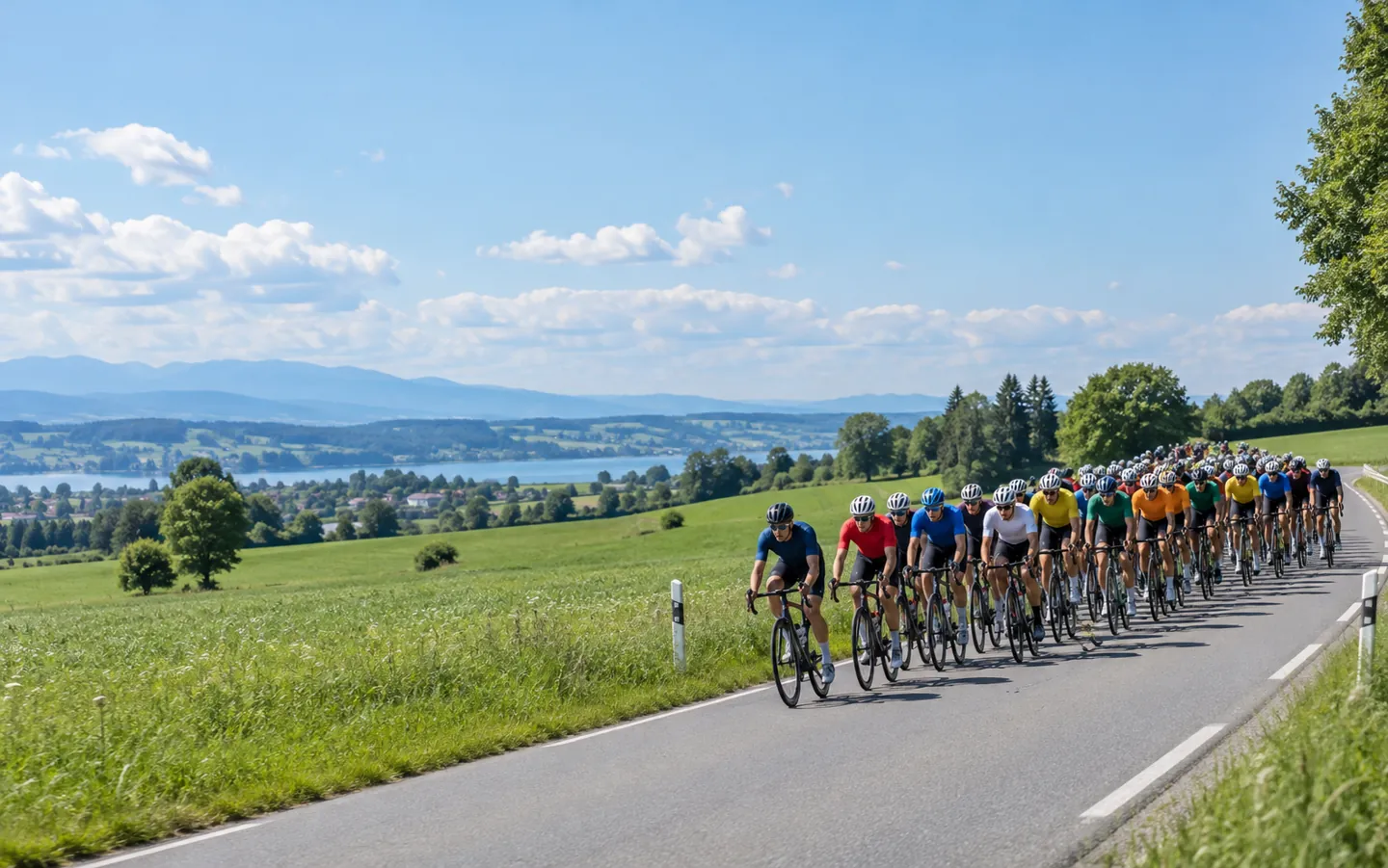
 doodleracer
WHAT THE WIND TUNNEL SHOWS
5–7% DRAG deep in the bunch
At racing speed, the air pushes back hard.
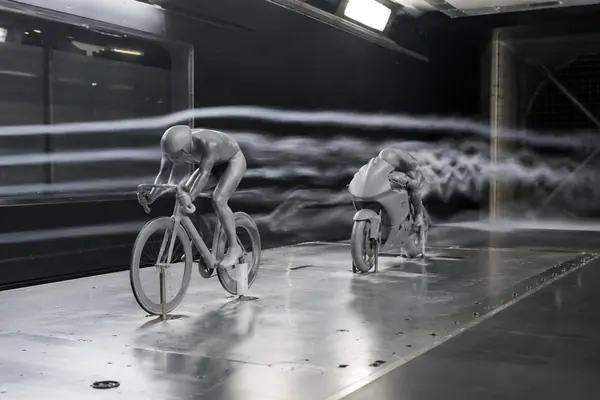
Drag grows with the square of speed, so going faster gets hard quickly. Racers beat it by tucking in behind others. Wind tunnel tests and huge computer simulations show the shelter is far bigger than riders once assumed.
Updated
Find the shelterTHE SHORT ANSWER
Air resistance climbs steeply with speed.
Riding in someone's wake cuts it dramatically.
PELOTON
In a study of a 121-rider peloton, riders in the middle and at the back faced about 5 to 7% of the drag of a solo rider, like riding at 12 to 15 km/h in a bunch doing 54 km/h.
Find the shelterTHE PHYSICS
NASA explains that drag depends on air density, body size and shape, and the square of the velocity. Double the speed and the drag force rises about fourfold.
See the numbersMOTORBIKES
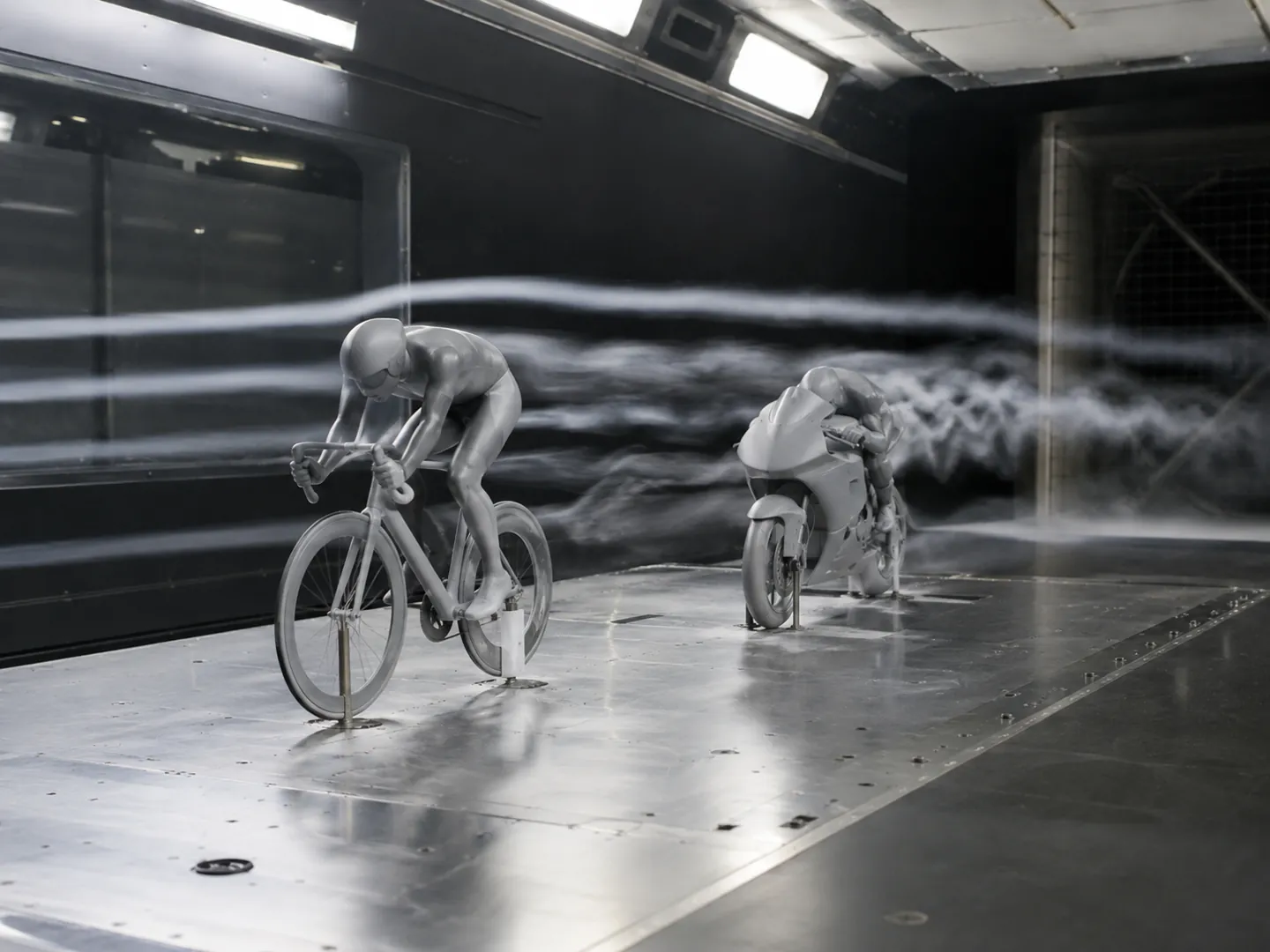
Wind tunnel tests found a motorbike 0.25 m behind a time-trial rider can cut their air resistance by almost 9%, and three motorbikes by up to 14%.
Where the wind goesA QUICK SHELTER CHECK
Pick a position to see how much air resistance a racing cyclist saves, from Eindhoven University of Technology wind tunnel and simulation studies. The bar shows how much shelter the rider gets.
Figures from studies at a reference speed of 54 km/h. Real races vary with wind, road and the gaps between riders.
TWO NUMBERS WORTH KNOWING
One figure from the biggest peloton simulation,
one from the motorbike tests.
5–7%
Drag in the middle or back vs solo
Simulations with 3 billion cells and wind tunnel tests of a complete 121-rider model peloton gave the same answer: far less drag than the 50 to 70% previously assumed.
PELOTON · TU EINDHOVEN 2018
48%
Drag cut 2.6 m behind a motorbike
At about 2.6 metres behind a motorbike, a rider experiences up to 48% less drag, gaining 14.1 seconds every minute at a reference speed of 54 km/h.
MOTORBIKE · TU EINDHOVEN 2019
The researchers suggested race teams' models for timing breakaways had used the older, smaller drag savings, which may help explain why so few breakaways succeed.
READING A RACE
The studies also point to where riders choose to sit, and why the rules on race vehicles matter.
A rider who escapes faces far more drag than the bunch. The researchers said this may explain why so few escapes succeed.
The peloton study's lead researcher suggested rows 6, 7 or 8 for sprinters and overall contenders: well sheltered, but close enough to react.
Drag is very low at the back, but there is less chance to react to attacks and crashes happen more often.
Researchers urged cycling's governing body to raise the 10 m minimum gap for following motorbikes to 30 m, and to enforce it.
MEASURED TWO WAYS

The peloton study combined computer simulations of two 121-rider pelotons with slightly different gaps between rows, and wind tunnel tests on a complete peloton of scale models. The two methods independently gave the same results.
The motorbike studies used the same pairing. In short time trials a following motorbike could be worth a few seconds; in longer time trials the researchers said the difference could reach a minute.
Questions
To shelter from air resistance. An Eindhoven study found riders in the middle and back of a 121-rider peloton experience only about 5 to 7% of the drag of a solo rider.
Earlier studies of small groups riding in line found drag fell to about 50 to 70% of a lone rider's. Deep inside a large, tightly packed peloton the saving is much larger.
Drag depends on the square of velocity, NASA explains. Doubling speed roughly quadruples the drag force a rider must overcome.
Yes. Wind tunnel and simulation studies found a motorbike 0.25 m behind a time-trial rider cut drag by almost 9%, and up to 14% with three motorbikes.
The researchers noted a regulatory 10 m distance and called for it to be raised to 30 m and properly enforced, as the wake still reduces drag by about 12% at 30 m.
Sources
ABOUT THIS NAME
doodleracer.com is part of the DoodleSale portfolio. It isn't in an auction right now, but you can ask about leasing it.